To rebuild, or not to rebuild? That is the question.
Our latest reclad project has presented many of the typical obstacles we try to anticipate and warn our clients of prior to starting work on an old kiwi bungalow.
Eye for Detail was asked to inspect the 1950's home in Mangere Bridge for a client. From what we could see (without removing any cladding), it was a solid well-built home. All piles and floor joists were sound with no sign of water ingress or damage, and no obvious sign of rot (although in a house of this age you can safely assume there will be some borer-ridden timber somewhere).
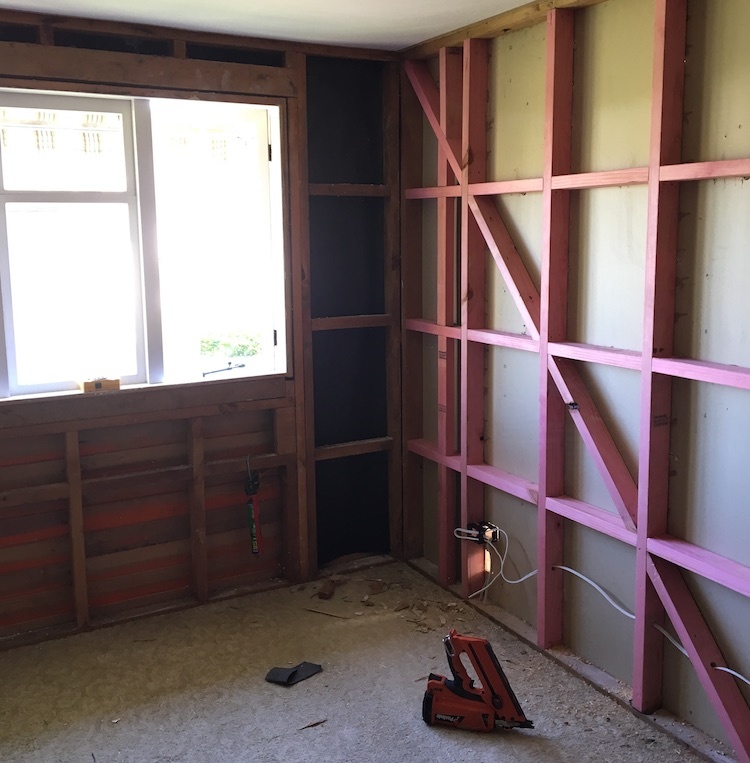
Our clients purchased the house and Eye for Detail's first task was to internally reclad and insulate the three bedrooms to make the family comfortable for winter.
Once opened up, we revealed that over time, the framing had severely twisted. This wasn't helped by the originally builder using an old technique to straighten warped timber, namely by putting a cut deeper than 50% of the timber's thickness in order to counteract the bow. Unfortunately, the builder did this to nearly every stud, sometimes cutting over 75% of the timber's depth, thus severely weakening the framing.
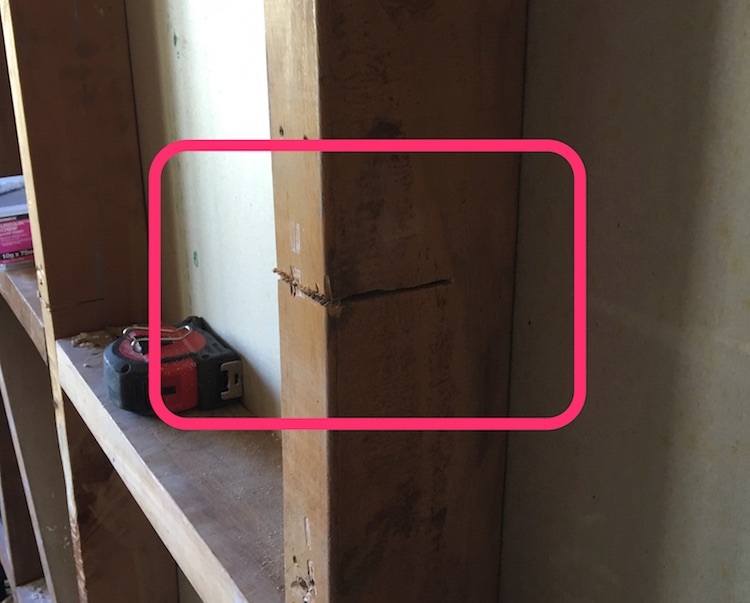
Today, pine framing is relatively cheap and very accessible, so we would never use this method; it is much safer to just replace the damaged timber. In fact, if timber arrives on site in poor condition, we send it back straight away. Additionally, it is up to the builder to ensure that all materials are kept in premium condition once on site.
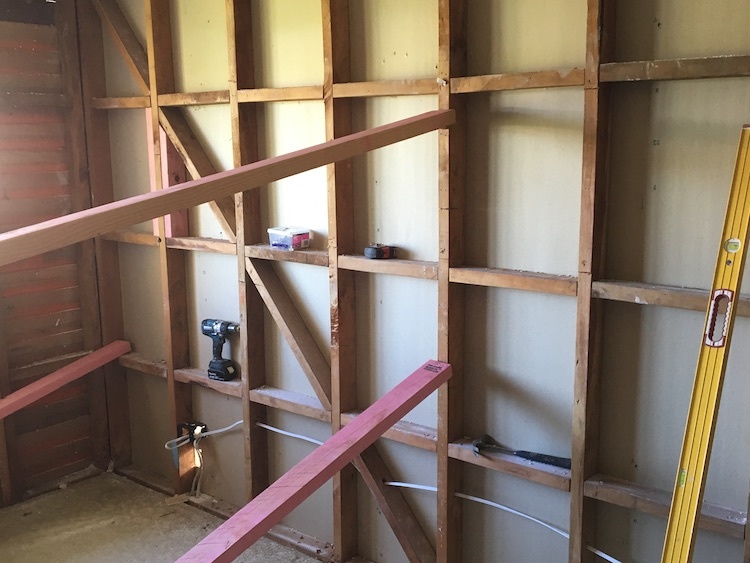
One wall was in particularly bad condition, so we had to make a decision - to either straighten the existing wall or rebuild it. Often you can straighten a wall by using packers, or by planing the studs and nogs. But once old heart Rimu frames have dried, you can't even fire a nail into them, let alone straighten them. We had to rebuild the wall which added a little bit of time and material costs to the project, but it was worth it in the end.